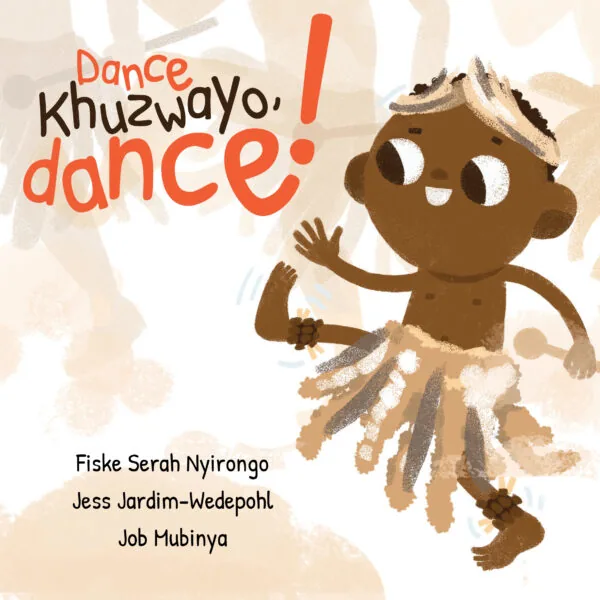
A warm story about loving an activity but feeling nervous when the audience grows. Khuzwayo’s friends support him by listening and practising alongside him.
Chosen to lead the Ingoma dance, Khuzwayo worries about performing for a large audience, runs away, then practises with his friends and dances on the day.FavourableFavourable: the book presents this theme approvingly or positively.Favourable: the book presents this theme approvingly or positively.
How the book presents it: The story presents friends’ practical encouragement as supportive, while Khuzwayo’s remaining nerves are not treated as something he must completely overcome before taking part.
Talk about: What helps Khuzwayo take part, and does he seem to need to stop feeling nervous first?
Ingoma and community
The Ingoma dance is described as celebrating the first crops of the year; Khuzwayo leads his village to the arena in a special outfit.Exploratory / explanatoryExploratory / explanatory: the book explains or explores the subject without an established evaluative position.Exploratory / explanatory: the book explains or explores the subject without an established evaluative position.
How the book presents it: The dance is given a celebratory community role in the story, but the pages offer only a brief explanation of its wider cultural meaning.
Talk about: What does the story tell you about why the village gathers for the dance?
✦
Why It May Be Worth Reading
The Ingoma dance is linked to the first crops of the year, giving the performance a community and seasonal context as well as a personal challenge for Khuzwayo.
!
What Deserves Attention
Khuzwayo says the performance feels too scary, runs away and later admits he is nervous about making a mistake. The worry is present but not depicted as a crisis.
↔
A Conversation Worth Having
What helps Khuzwayo keep dancing even though he still feels nervous, and what might help you when you want to try something in front of other people?
◇
Reading Approach
Pause when Khuzwayo runs away and let the child describe what he might be feeling. At the final dance, notice the rattles and ask what changes—and what does not.
Confidence & Basis
Theme indicators describe how the book presents a topic; they are not a verdict on the whole book or your family's values. Confidence reflects how much book-specific material was checked. The complete text and illustrations were available for this guide.
What remains unconfirmed
Performance nerves and support: The story shows this particular performance; it does not establish how Khuzwayo feels about other challenges or whether the same approach works for everyone.
Ingoma and community: The book’s brief account does not explain the dance’s broader history or how it may be practised in different communities.
 Suitabook